
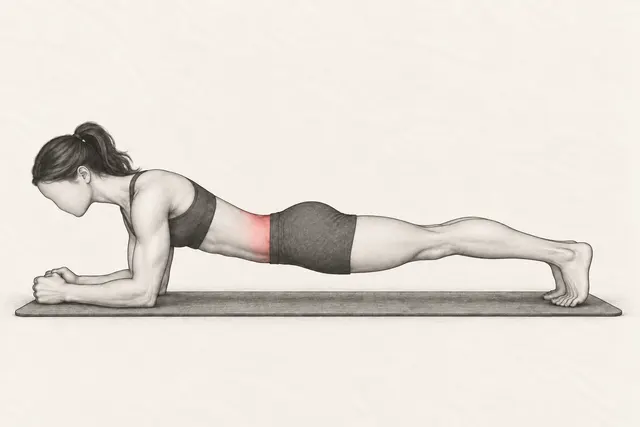
Sagging hips
Squeeze your glutes and tuck your pelvis slightly so your body forms one line. When the hips drop, end the set or shorten the hold.
Exercise guide
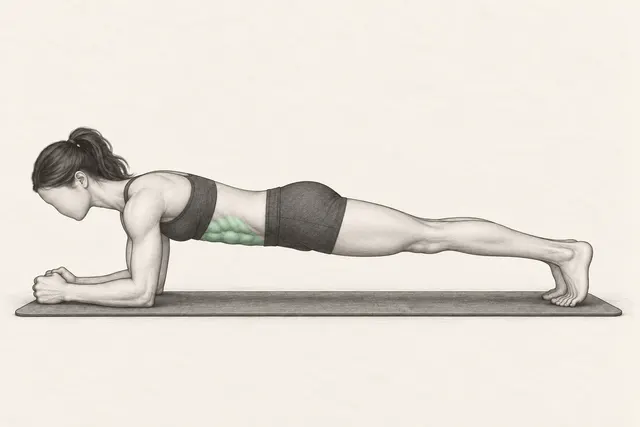
The front plank is a core hold: rest on your forearms and toes with your body in one straight line, brace your abs and glutes, and breathe.
At a glance
Illustrations are from the Spriwa app's exercise guide. They are AI-generated.
How to do it
Hold the forearm plank position; there is no repeated lowering or lifting. Shorten the hold before your form changes.
Common mistakes
Each mistake with a fix.
Squeeze your glutes and tuck your pelvis slightly so your body forms one line. When the hips drop, end the set or shorten the hold.
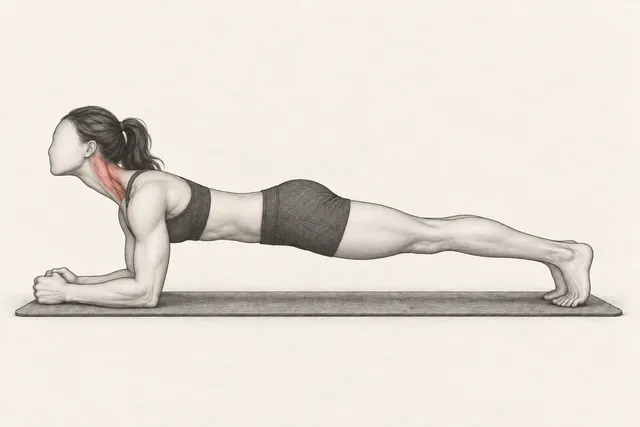
Keep your head in line with your spine, eyes on the floor just ahead of your hands. Craning your neck up loads it and loosens your trunk.
Keep reading
Questions
Hold it for as long as your position stays solid. Several shorter, well-braced holds beat one long sagging one; add time gradually.
Usually your hips are sagging or your lower back is arching. Squeeze your glutes, brace your abs and shorten the hold. If you feel pain, stop and see a professional.
Stop for sharp pain, new numbness or weakness, dizziness, faintness or chest pain. This guide is general information, not medical advice. Nutrition, readiness and AI answers are estimates and can be wrong. Spriwa supports general wellbeing and does not give medical advice.
In the app
Spriwa builds your programme and shows each exercise in the app with steps, side and mirror views, what to watch for and when to stop.