
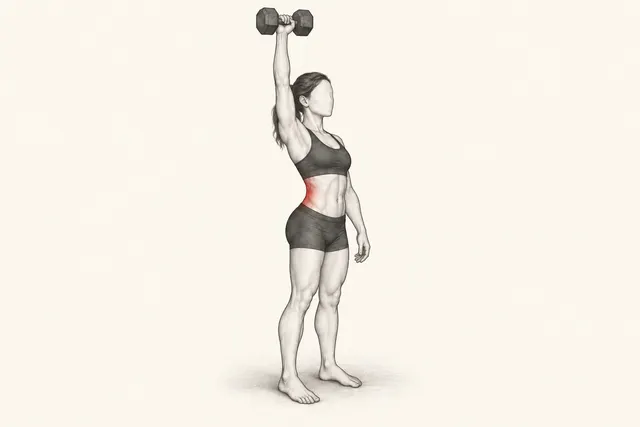
Low back arch
Stack your ribs over your hips and the weight over your shoulder, with your glutes squeezed. If your lower back arches under the load, use a lighter weight.
Exercise guide
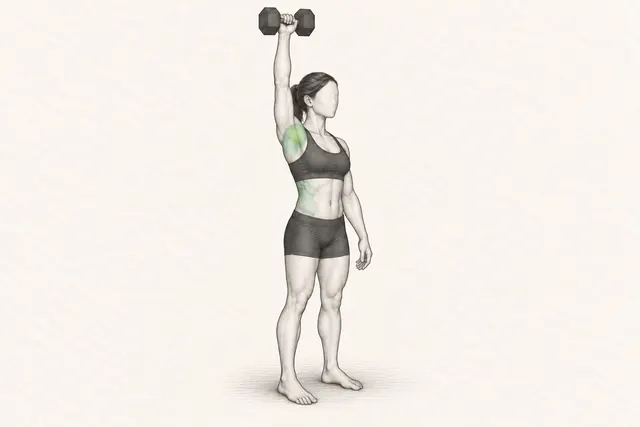
The Overhead Carry trains your front shoulders.
At a glance
Illustrations are from the Spriwa app's exercise guide. They are AI-generated.
How to do it
There is no joint range to speak of; the working variables are load, time and distance.
Common mistakes
Each mistake with a fix.
Stack your ribs over your hips and the weight over your shoulder, with your glutes squeezed. If your lower back arches under the load, use a lighter weight.
Keep reading
Questions
The Overhead Carry mainly works your front shoulders. It also works your obliques, upper traps, side shoulders, abs, forearm flexors, glutes and lower back.
Low back arch. Stack your ribs over your hips and the weight over your shoulder, with your glutes squeezed. If your lower back arches under the load, use a lighter weight.
Dumbbells.
Stop for sharp pain, new numbness or weakness, dizziness, faintness or chest pain. This guide is general information, not medical advice. Nutrition, readiness and AI answers are estimates and can be wrong. Spriwa supports general wellbeing and does not give medical advice.
In the app
Spriwa builds your programme and shows each exercise in the app with steps, side and mirror views, what to watch for and when to stop.